
40-second latency, 8K quality, multi-person on one screen—how did we do it? Many people think AI-translated livestreaming is just a few lines of subtitles floating on the screen. That’s called subtitles, not translation. Zhowcase does “facial translation”—you speak, AI changes your lip movements, clones your voice, preserves your expressions. Viewers see a “you who speaks their native language,” not a “you with subtitles.” And behind all of this are three core technologies we developed in-house. Today, let’s briefly chat about: how exactly does Zhowcase do it? Technology 1: Real-Time Facial Translation—Turning 4 Minutes into 40 Seconds
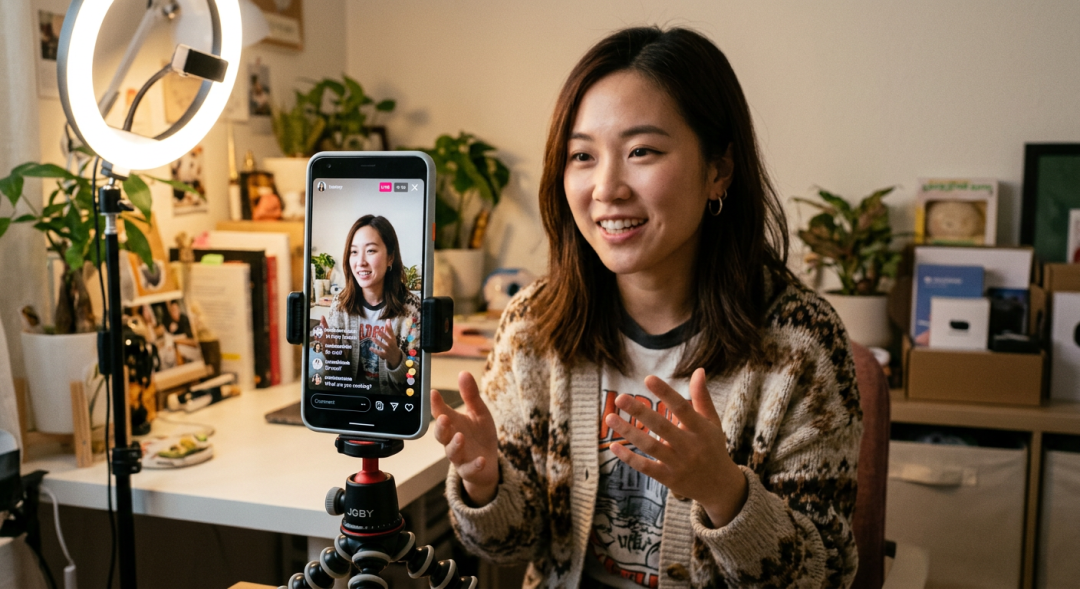
Before Zhowcase, facial translation had a frustrating fatal flaw: it was slow. In the past, translating 1 minute of video took 4 minutes. This meant the technology could only be used for recorded videos and had no connection to live streaming—and live streaming is precisely the biggest gateway to globalization. How did we solve it? Traditional facial translation required dozens of computational steps, like a congested single-lane road. Our self-developed algorithm streamlined the process to just a few critical steps while efficiently utilizing GPU resources—like widening a single lane into an eight-lane highway. The result? Now, 1 minute of video takes only 40 seconds. Live streaming only needs one initial delay—the moment the host speaks, global audiences already hear their native language. Even better, all of this runs on a single NVIDIA A10 GPU released back in 2021. Costs are controllable and deployment is feasible. Not an ivory tower in the lab. Technology 2: High-Quality Facial Translation—Saying Goodbye to “Blurry Mouths”
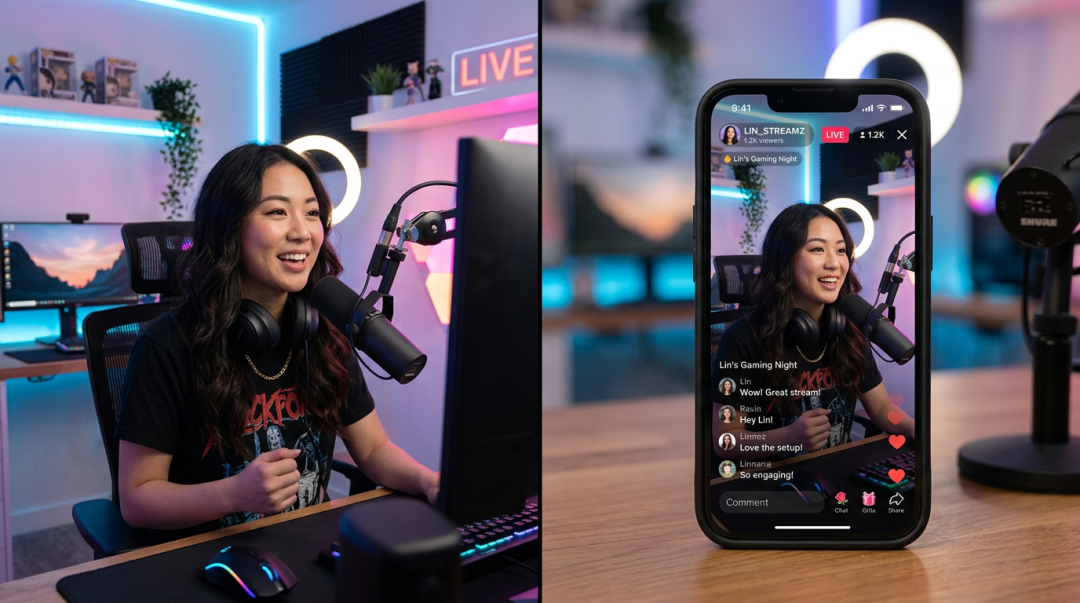
If you’ve seen traditional facial translation videos, you’ll notice a common problem: the mouth is blurry. Lip edges are unclear, resolution fluctuates wildly, like pixelation. Sometimes there’s even the eerie phenomenon of the “disappearing lips”—the person is speaking, but the mouth is just a cluster of pixel blocks. This quality cannot be used in serious live commerce. Viewers are instantly pulled out of the experience, let alone being able to see the texture of lipstick or details of food. How did we solve it? We developed our own facial restoration technology. Simply put: the algorithm “extracts” the blurry lip area, then uses the original video’s HD information to “redraw” it clearly. Not simple sharpening, but true “restoration”—making the texture, edges, and gloss of the lips completely consistent with the original video. Even better, this technology requires no additional training and can directly output at any resolution. 1080p is standard. 4K is no problem. Even 8K is achievable. Your translated video is as clear as your original. Technology 3: Multi-Person Facial Translation—No Fear of Multiple People on Screen
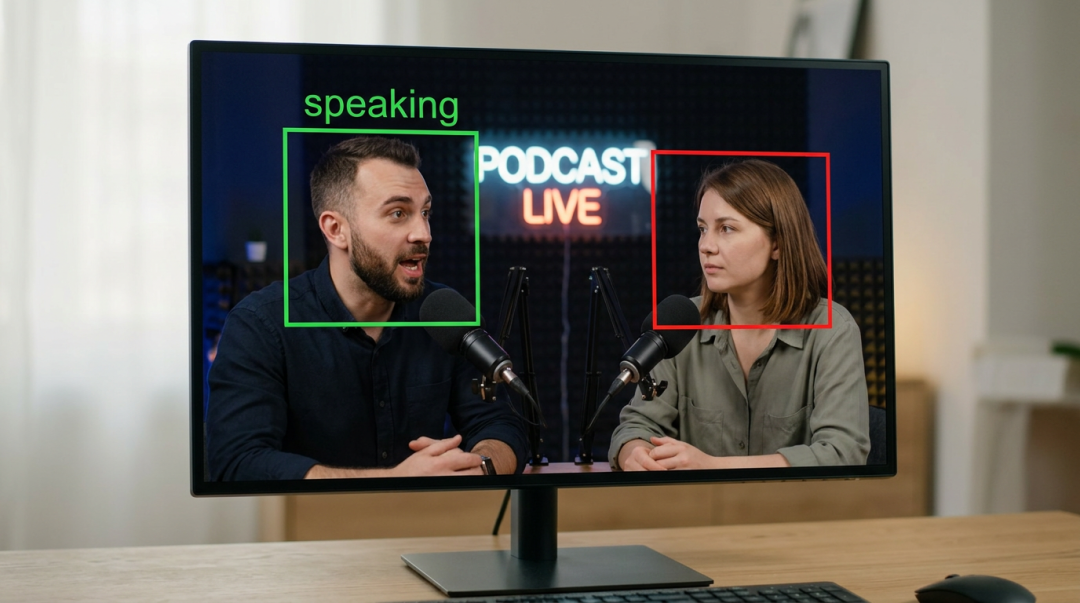
Traditional facial translation has another fatal shortcoming: it can only handle single-person videos. Once two people appear on screen, the AI gets confused—who exactly should it translate? The screen then becomes chaotic, both people’s mouths move at the same time, or neither moves at all, and the translation completely fails. This means interview programs can’t be done, multi-person live streams can’t be done, and even multi-guest interactions become a pipe dream. How did we solve it? We built a multi-person recognition system. First, the system creates a voice profile for every character in the video—remembering what each person’s voice sounds like. Then, when multiple people appear on screen, computer vision technology identifies “who is speaking” in real time and retrieves the corresponding profile for precise translation. Whoever speaks, gets translated. The moment of switching, the system follows seamlessly. Currently, our accuracy has exceeded 90%, far surpassing the industry average of 50%. And we are continuously optimizing the algorithm, targeting accuracy above 99%. This Is Not the Same as AI Digital Humans
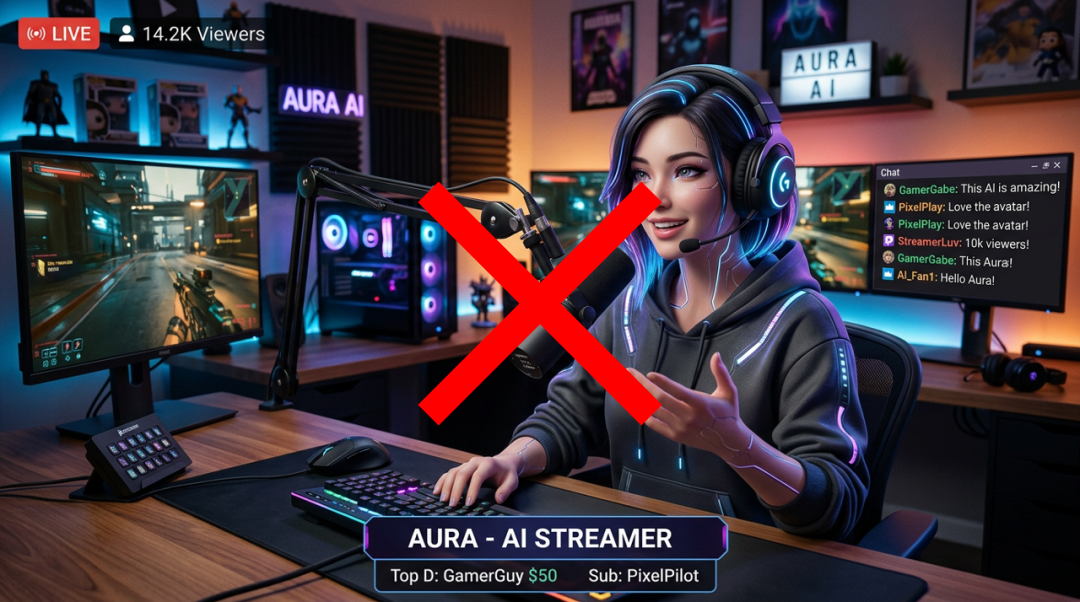
At this point, some might ask: what’s the difference between this and the popular AI digital humans? The answer: completely different things. AI digital humans are an image driven by AI to do repetitive motions—stiff expressions, wooden interactions. Platforms can spot it instantly—traffic restriction, visibility downgrade, ban. A combo punch later, sellers lose everything. Zhowcase does only one thing: lets real people speak to the whole world. Not creating a fake person to speak for you—it’s you speaking. It’s just that when you speak Chinese, AI synchronizes your lip movements, voice, and expressions into 20+ languages. Viewers see you, and hear their native language. Those high-level scenarios requiring complex body movements (like live commerce) are things AI digital humans will never master, but Zhowcase handles perfectly. The Future: We’re Still Accelerating Currently, Zhowcase’s livestream initial latency is 40 seconds. Our goal: compress it below 20 seconds. From low latency to ultra-low latency; from usable to excellent—this is the path we’re on. Three core technologies, 19 China-US patents, from 4 minutes to 40 seconds, from 540p to 8K, from single-person to multi-person… Zhowcase is step by step turning what was once impossible into possible. Language is no longer an obstacle. Livestreaming is now borderless.